
Keyword Basics: SEO for Beginners
Keywords are how people find what they need and how Google finds you
They’re the tiny bridge between a search and a solution, connecting what someone types into Google with the pages that appear in their results. In this beginner-friendly guide, we’ll take a gentle look at keyword basics: what they are, why they matter, and how to use them naturally so your content can shine online.
What Are Keywords?
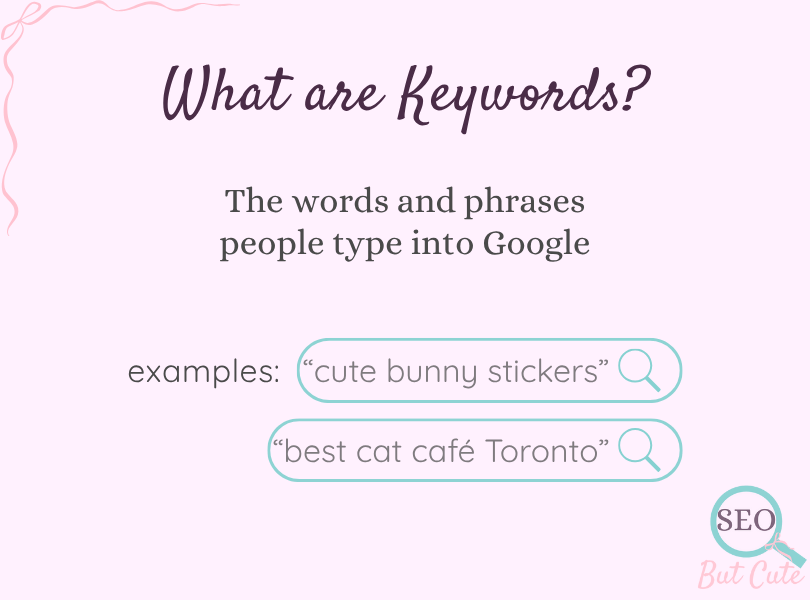
Keywords are the words and short phrases people type into Google when they’re searching for something. They act like little clues that tell search engines what your content is about.
Think of them as the language your audience already speaks online. Phrases like “cute bunny stickers” or “best cat café Toronto” might seem simple, but they help Google understand exactly what your page offers and who it’s for
When you use the same natural language as your readers, you make it easier for the right people to discover you.
Why Keywords Matter
Google matches searches, which contain keywords, to websites. When your keywords align with your topic, you show up; when they don’t align, Google looks elsewhere.
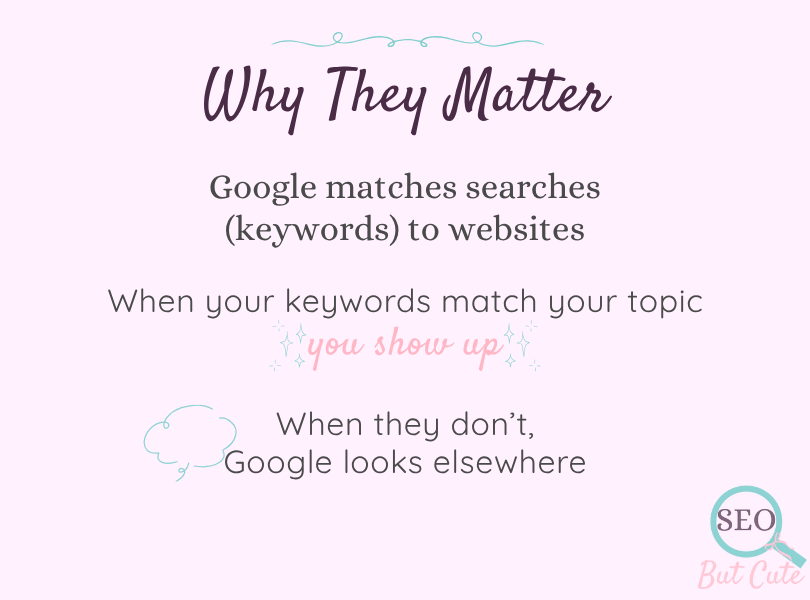
That’s why choosing the right keywords isn’t about perfection, it’s about connection. Using words your audience actually types into the search bar helps Google recognize your content as relevant, useful, and worth showing.
Good keyword choices make your content easier to find, not just by algorithms, but by the real people looking for what you share.
Types of Keywords
Not all keywords work the same way, and that’s what makes them so helpful. There are two main types to know about:
Short-Tail Keywords
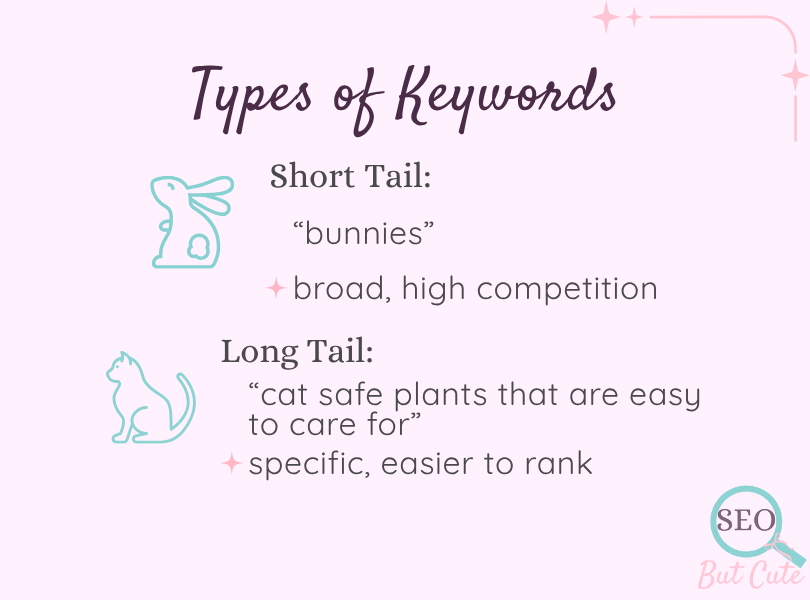
These are broad, high-competition terms like “bunnies.” Lots of people search for them, which means they’re great for visibility but harder to rank for.
Long-Tail Keywords
These are more specific, like “cat safe plants that are easy to care for.” Fewer people search for them, but those who do are looking for exactly what you offer.
Short-tail keywords help search engines understand your general topic, while long-tail keywords help connect you with the right audience. Using a mix of both keeps your SEO balanced, natural, and effective.
Where to Use Keywords
Once you’ve found your keywords, it’s all about using them naturally in the right places. Search engines (and readers!) rely on context, so placement matters more than repetition.
Here are a few key spots to include them:
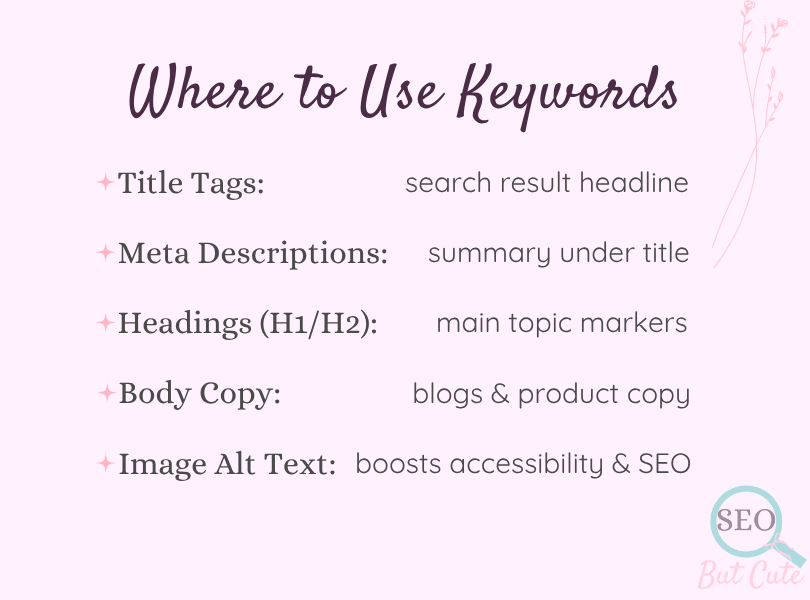
The goal isn’t to fit your keyword everywhere, it’s to use it where it feels natural. When your content reads smoothly, both readers and search engines can understand it better.
Keywords are how people find you, and how Google understands what you offer. Short-tail keywords, like “bunnies,” help establish your main topic but can be harder to rank for. Long-tail keywords, like “cat safe plants that are easy to care for,” connect you with a smaller but more specific audience.
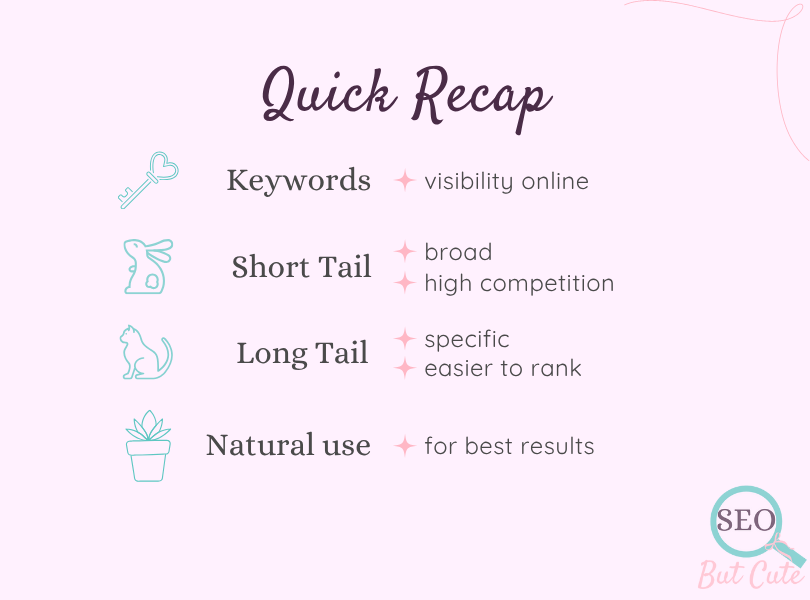
Cozy Takeaway
Learning keyword basics is really about learning how people search, think, and talk online. When you use the same words your audience uses, your content feels more personal, and Google picks up on that.
You don’t need a complicated strategy to get noticed. A few thoughtful phrases, a natural tone, and a sprinkle of consistency go a long way.
If you’re curious to keep learning, check out more cozy SEO posts on my blog, or come hang out on Instagram for simple tips and gentle reminders that growth takes time.