
Keyword Basics: Don’t Overthink Keywords
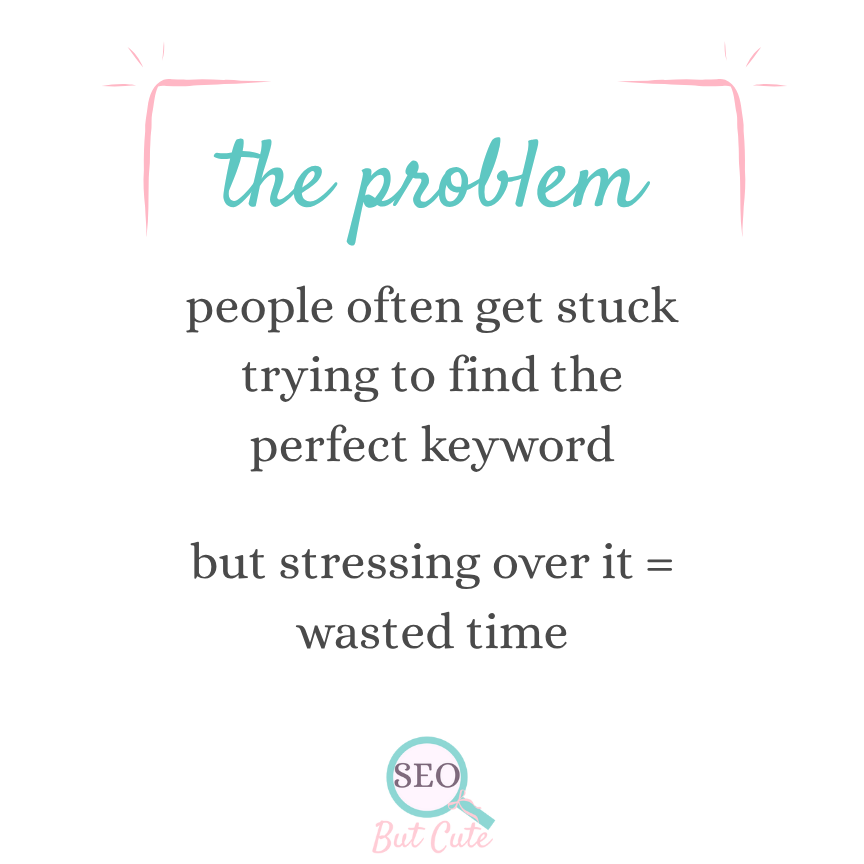
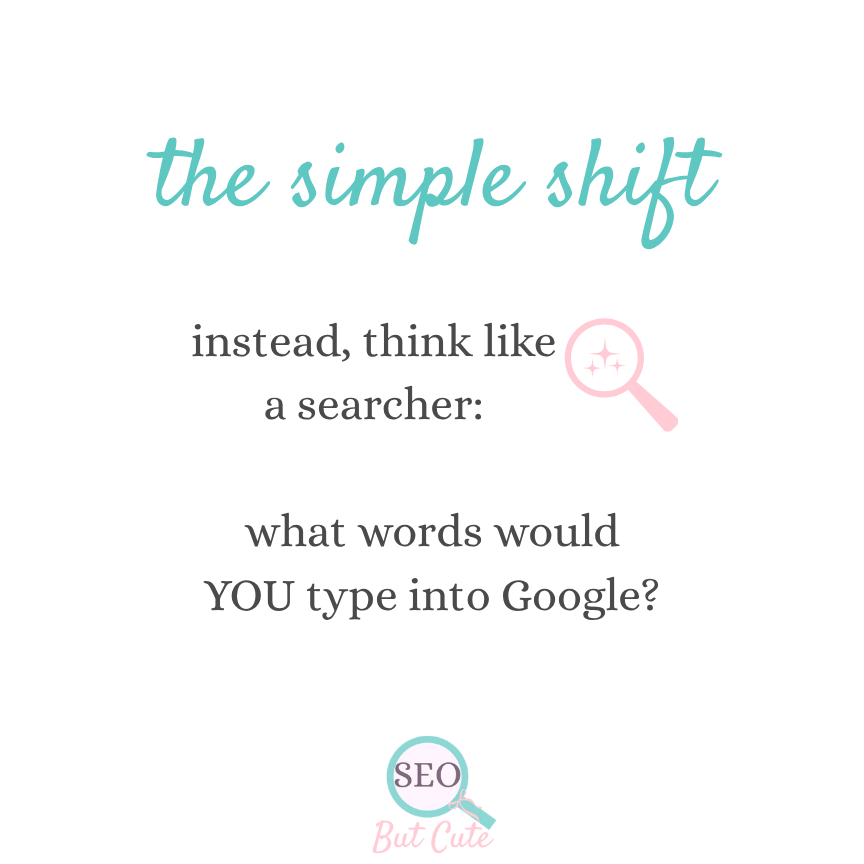
When we think about SEO, it is easy to picture complicated tools, spreadsheets, and endless keyword lists. But here is the truth: learning keyword basics doesn’t have to feel overwhelming. In fact, the best keywords often come from the simplest question: what would you Google if you were looking for this? That single question can take a lot of the stress out of keyword research and make the process more approachable.
Why Keywords Matter
Keywords are the bridge between what people search for and what your content offers. They help search engines understand your page, but they also reflect how real people think and type when they are trying to solve a problem. For example, someone who wants to learn how to bake bread might search “how to bake bread at home” or “easy bread recipe.” Those phrases become keywords that tell both you and Google what kind of content belongs on that page.
Think of keywords as the language your audience uses when they are looking for answers. If your content uses that same language in a natural way, you make it easier for people to find you.
The “What You’d Google” Approach
Instead of obsessing over exact-match phrases or stuffing keywords where they do not fit, start with the basics. Imagine you are the searcher. What words would you type into Google? A question? A short phrase? A product name? That instinct is often closer to what your audience is actually searching than a long, robotic keyword string.
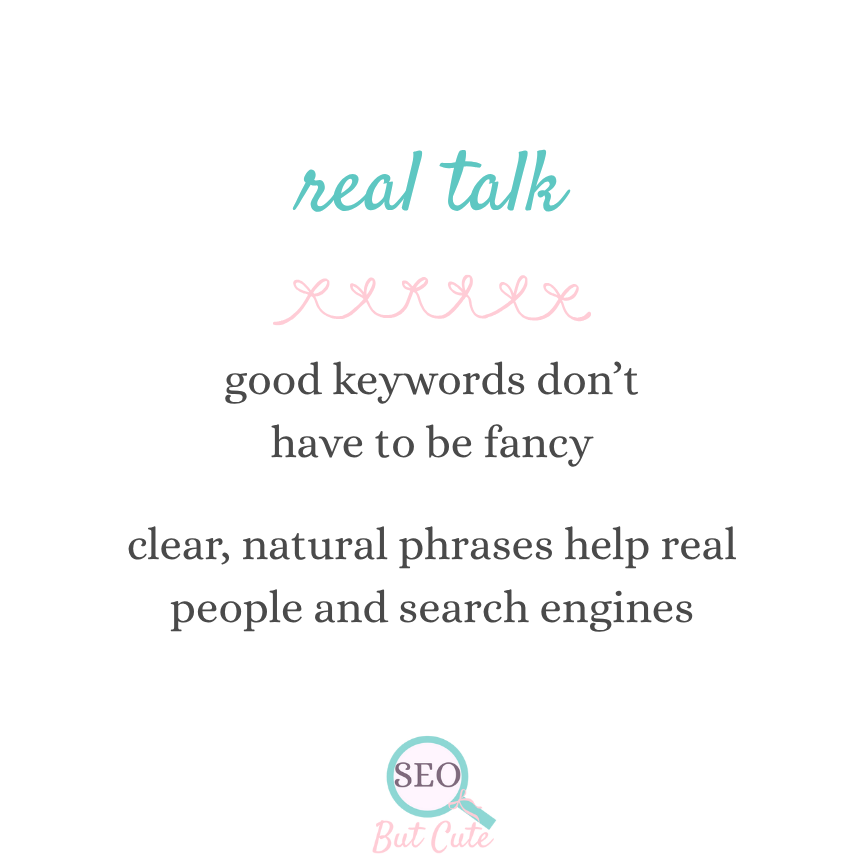
For example, if you are writing about coffee mugs, you might be tempted to chase a keyword like “ceramic coffee drinking vessel wholesale.” That sounds technical, but no one would ever type that into Google. They would search something like “ceramic coffee mug” or “best mug for tea.” Your natural instinct for how people talk will usually line up better with real searches than over-engineered keywords.
This approach does not mean ignoring tools altogether. Keyword tools can confirm search volume and show you variations you might not think of on your own. But they should support your instincts, not replace them. Start with the simple “what would I Google?” question, and then let tools guide you from there.
Keep It Natural
Once you have your keywords, the next step is weaving them into your content in a way that feels natural. Search engines are smart enough to connect related terms, so you do not need to repeat the same phrase over and over. Instead, place your main keyword in a few important spots:
- Your page title and meta description
- The first 100 words of your content
- At least one H2 heading
- Naturally throughout the body text
Beyond that, let your writing flow. For example, if your keyword is “eco-friendly candles,” you might also naturally mention “soy wax candles,” “sustainable candles,” or “non-toxic candles.” Google understands that all of these terms connect to the same topic.
Small Step, Big Impact
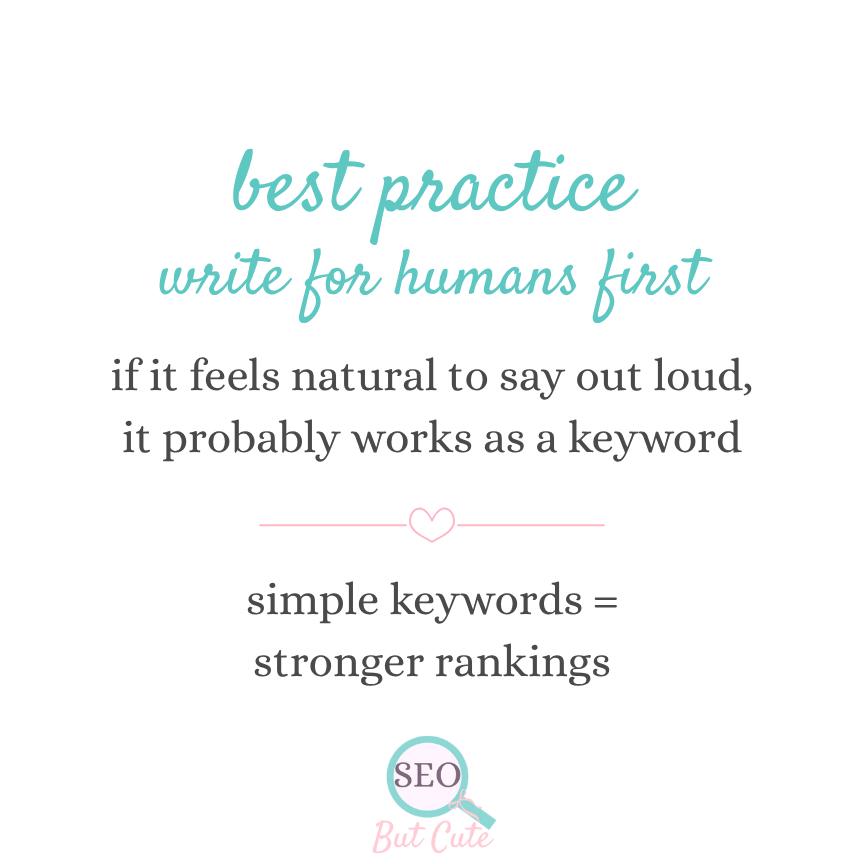
The goal is not to “hack” Google, it is to help your content meet people where they are. When you think like your audience, your keywords stay human, relevant, and way less stressful.
By focusing on simple, natural phrases, you will save yourself hours of overthinking and still create content that ranks. Sometimes, the simplest approach really is the smartest one. If you can picture someone typing your phrase into Google, you are on the right track.
Want a deeper dive into keyword basics? Check out my Keywords 101 guide for a beginner-friendly breakdown.
For more on how search engines see keywords, Google has an overview of how keyword planning works.